QUICK SUMMARY
Osteoporosis is a silent but preventable condition that weakens bones over time. Whether you are a woman in your 40s or a man past 60, the right combination of hormone support, an active lifestyle, and dietary choices can significantly protect your bone density and long-term quality of life.
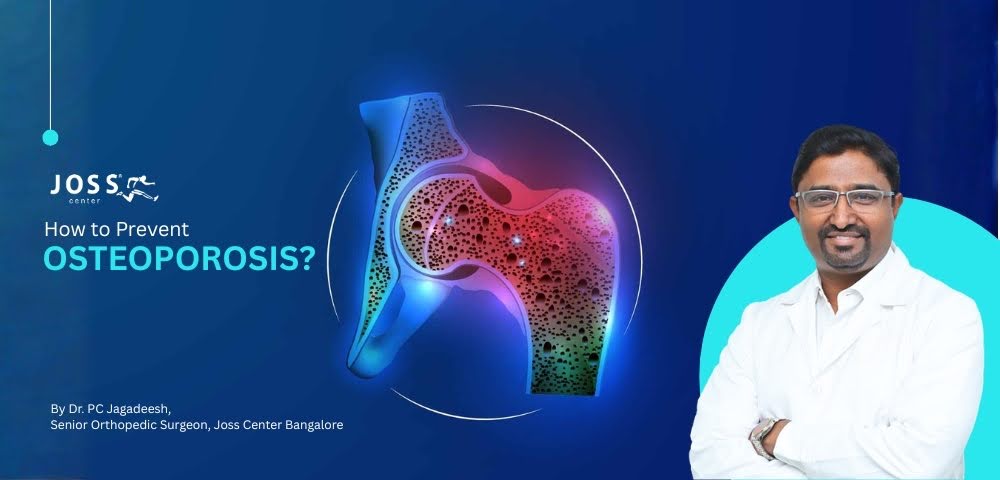
How to Prevent Osteoporosis | Dr. PC Jagadeesh, Joss Center Bangalore
What Is Osteoporosis and Why Should You Act Early?
Osteoporosis is a condition where bones become porous, brittle, and prone to fractures. It develops silently over the years, often without any symptoms, until a fracture occurs. By the time most people notice a problem, significant bone mass has already been lost.
The good news: Osteoporosis is largely preventable. With the right interventions at the right time, you can maintain strong, healthy bones well into old age.
Who Is Most at Risk?
In Women
Osteoporosis in women typically begins around the age of 40 to 50. The primary driver is the decline of estrogen, particularly around menopause. Women who undergo a hysterectomy (surgical removal of the uterus) experience an even more abrupt hormonal drop, which can accelerate bone loss significantly.
In Men
Men generally have higher bone density and tend to develop osteoporosis later in life, around the ages of 60 to 70. The key culprit is the gradual reduction of testosterone, which plays a vital role in maintaining bone mass throughout a man’s life.
The Root Cause: Hormonal Decline
Bone is living tissue. It is constantly being broken down and rebuilt, and hormones are the regulators of this process. When estrogen (in women) or testosterone (in men) falls below healthy levels, the body breaks down bone faster than it can rebuild it. Over time, this imbalance leads to reduced bone density, the hallmark of osteoporosis.
Important: A drop in hormones does not automatically mean bone loss is inevitable. With timely intervention, it is possible to maintain and even improve bone quality at any age.
How to Prevent Osteoporosis: 3 Proven Strategies
1. Hormone Replacement Therapy (HRT)
For women experiencing menopause or post-hysterectomy hormonal loss, Hormone Replacement Therapy (HRT) is one of the most effective ways to slow down bone loss. By restoring estrogen to healthy levels, HRT helps maintain the balance between bone formation and bone resorption.
For men with declining testosterone, Testosterone Replacement Therapy (TRT) or a testosterone-boosting diet can restore hormonal balance. This can be achieved through a combination of dietary interventions and, where medically necessary, prescribed therapies under the guidance of a specialist.
When to Consider Hormone Therapy:
- Women aged 40 or older, noticing symptoms of menopause or post-surgical hormonal changes
- Men aged 55 and above experiencing fatigue, reduced muscle mass, or early bone loss
- Anyone with a family history of osteoporosis or fractures
- Individuals with low bone density detected on a DEXA scan
2. Stay Physically Active
One of the most powerful ways to build and preserve bone density is through regular physical activity. When muscles contract during exercise, they pull on bones. This mechanical stress signals the body to deposit more calcium into the bone, making it denser and stronger.
The more active you are, the more your muscles work, and the better your bones respond. Sedentary individuals experience progressive bone thinning simply because their bones are not being loaded enough to trigger the body’s natural calcium-deposition process.
Best Exercises for Bone Health:
- Weight-bearing activities such as walking, jogging, and stair climbing
- Resistance and strength training using weights or bodyweight exercises
- Balance and flexibility exercises like yoga and tai chi to reduce fall risk
- Swimming and cycling for cardiovascular health (less impact on bones, but still beneficial overall)
3. Diet That Supports Bone and Hormone Health
What you eat directly influences your bone density and hormone levels. A diet rich in calcium, vitamin D, magnesium, and specific nutrients that support testosterone production can make a meaningful difference over time.
Bone and Hormone-Friendly Foods:
- Dairy products (milk, yogurt, paneer) for calcium and protein
- Leafy greens like spinach, methi, and moringa for calcium and magnesium
- Eggs, fatty fish, and sunlight exposure for vitamin D
- Nuts and seeds (especially pumpkin seeds and almonds) for zinc, which supports testosterone
- Legumes, lentils, and whole grains for sustained energy and hormonal balance
- Avoiding excessive alcohol and smoking, which are known to accelerate bone loss
The Hidden Danger of a Sedentary Lifestyle
Modern life, with its desk jobs, extended screen time, and reduced physical activity, has made sedentary behaviour one of the biggest contributors to early-onset osteoporosis. When you sit for most of the day, your bones receive little mechanical loading, and the body has no reason to maintain or build bone mass.
Avoiding a sedentary lifestyle is not just about adding a gym session here and there. It means making movement a consistent part of your daily routine, whether that means walking during lunch, taking the stairs, or stretching between work hours.
Dr. Jagadeesh’s advice: “If you take care of physical activity, hormone levels, and diet, osteoporosis can be reversed and bone quality can improve significantly. You can lead a completely normal life.”
When Should You See an Orthopedic Specialist?
You do not need to wait for a fracture to seek evaluation. Early detection through a simple bone density test (DEXA scan) can identify declining bone mass before it becomes a serious problem.
Signs You Should Get Checked:
- You are a woman aged 40 or above approaching or in menopause
- You have had a hysterectomy or are on hormone-altering medications
- You are a man over 60 with reduced activity levels or unexplained fatigue
- You have experienced a fracture from a minor fall or bump
- You have back pain, height loss, or a stooped posture developing over time
- You have a family history of osteoporosis or hip fractures
Avoiding a sedentary lifestyle is not just about adding a gym session here and there. It means making movement a consistent part of your daily routine, whether that means walking during lunch, taking the stairs, or stretching between work hours.